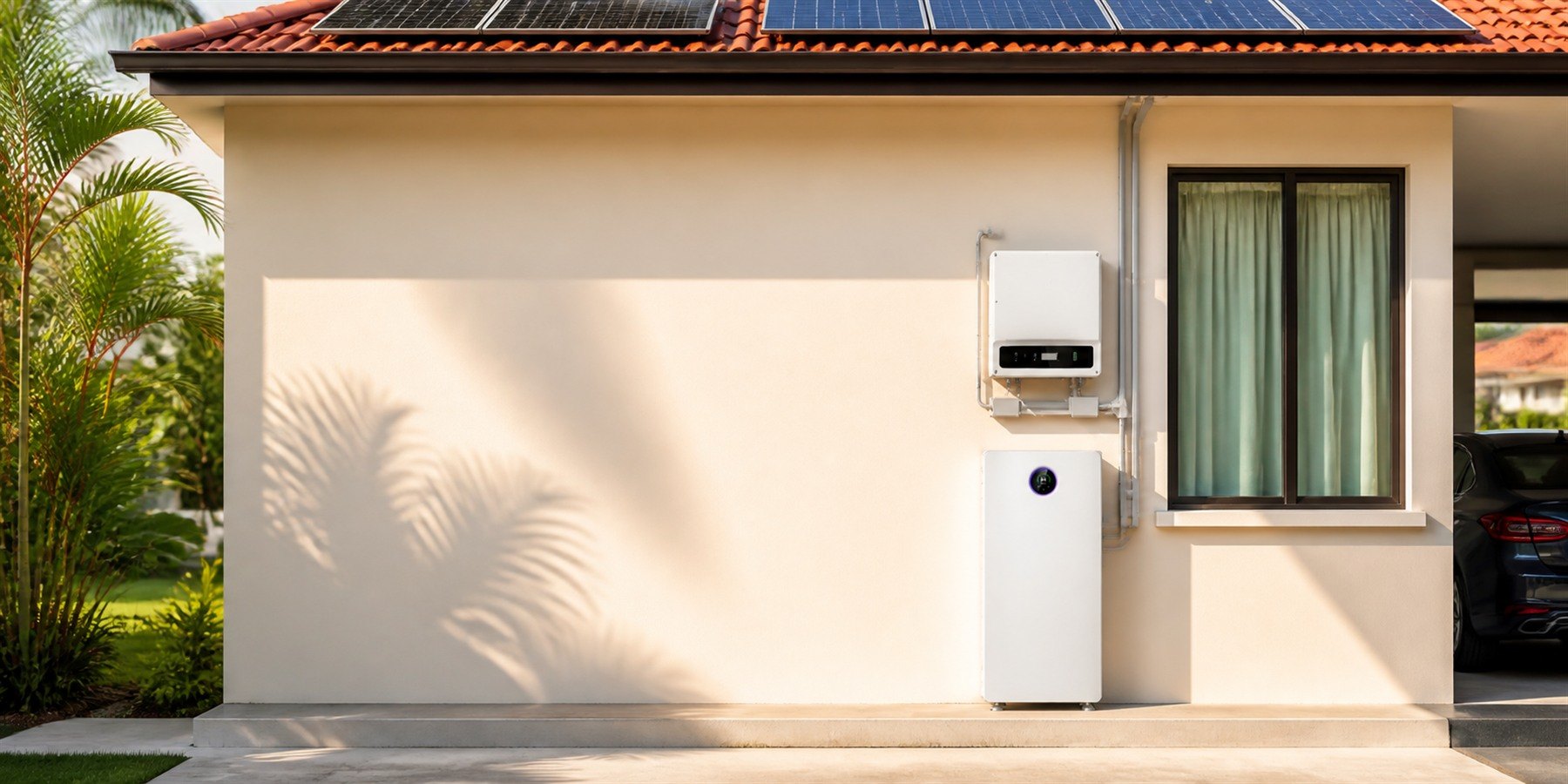
A quiet box on
a hot wall.
Home inverters usually get mounted somewhere inconvenient — the side wall, the car porch, outside a bedroom window. Fanless cooling means that placement stops being a compromise.
Pick by phase and by whether you want batteries
Grid-tied inverters send everything to the house and the grid. Hybrid inverters can also charge a battery, which is what keeps the lights on when supply drops.
| Series | Output | Phase | Type | Notable |
|---|---|---|---|---|
| DNS G4 | 3 – 6 kW | Single | Grid-tied | Fourth generation; 2 MPPTs; IP66 |
| ES Uniq | 3 – 12 kW | Single | Hybrid (LV) | 1 – 2 MPPTs; IP66; 4 ms backup |
| ET LV | 5 – 20 kW | Three | Hybrid | 2/3/4 MPPTs; IP66; 4 ms backup |
| SDT G3 | 4 – 30 kW | Three | Grid-tied | 2 MPPTs; fanless; IP66 |
What actually goes on the wall
Two ends of the residential range — the compact grid-tied inverter for a straightforward roof, and the floor-standing battery for a house that wants to keep running when the grid does not.
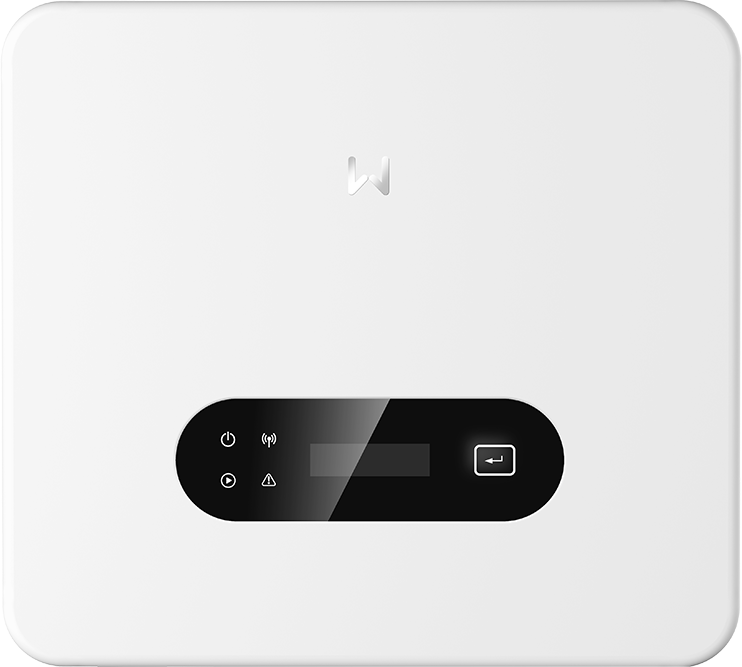
DNS G4 Series
As the fourth generation of GoodWe’s proven single-phase, dual-MPPT residential inverter, the DNS G4 series delivers enhanced performance, reliability, functionality, and safety — offering homeowners a more powerful and versatile solution for solar needs.
- 3 – 6 kW, single-phase, dual MPPT
- IP66 ingress protection
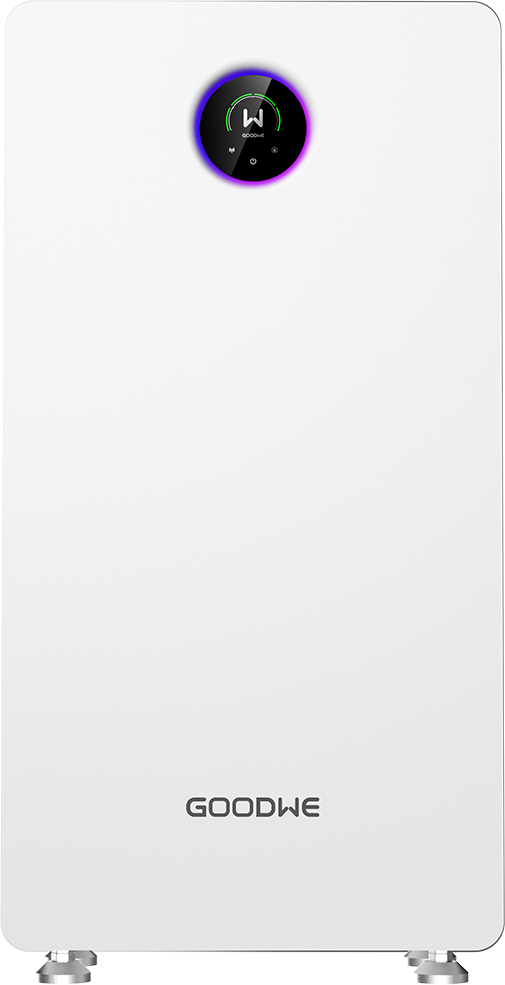
Lynx A G4 Series · 16 kWh
The floor-standing home battery, with a circular display showing state of charge at a glance. It pairs with a hybrid inverter — the battery stores, the inverter decides.
- 16 kWh in a single floor-standing cabinet
- 10,000 cycles rated life
- Aerosol fire suppression available as a safety option
- Floor standing — no wall structure needed to carry the weight
- Paired with a hybrid inverter, keeps selected circuits alive when the grid drops
How much backup do you actually need?
Batteries are priced by the kilowatt-hour, so oversizing is expensive and undersizing is annoying. These are the blocks available.
Entry block. Covers lights, fans, fridge, routers through a typical outage.
Low-voltage block for a household that wants aircon overnight.
High-voltage stack for a large home or a small commercial load. Add modules as demand grows.
Fast enough that a desktop PC does not reboot.
What a hybrid inverter actually does
Two minutes from GoodWe on why the hybrid unit is the one worth paying for — it is the part that decides where every kilowatt goes.
Send us your last bill
That one number tells us more about the right system size than any questionnaire. One of our authorized EPC partners will contact you with options and a personalized quotation.
Get a partner quote